A Framework for Scaling Guest Flow Through High-Capacity Water Park Design
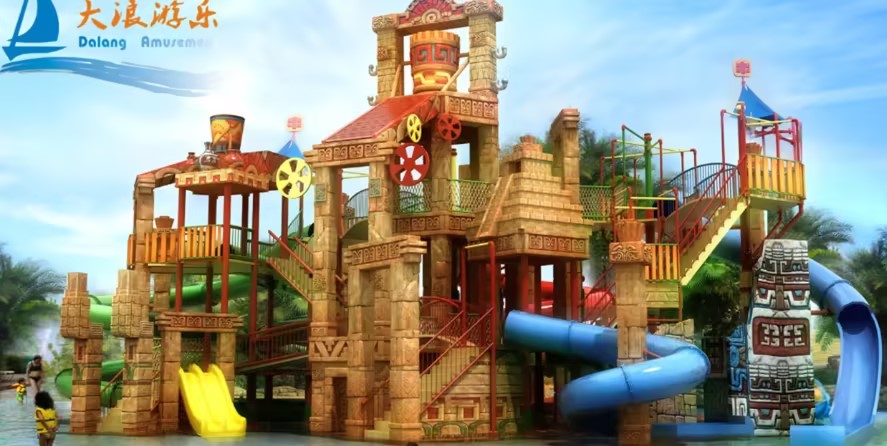
The framework below outlines a practical path for commercial resorts aiming to increase guest throughput through deliberate high-capacity water park design. This approach combines physical design, operations, and targeted equipment selection — beginning with the right water park equipment for core attractions and support zones. The framework treats throughput as a system: ride capacity, walkways, queuing lanes and support infrastructure must be balanced to move guests smoothly and safely.
Core principles of high-capacity water park design
Design for steady flow rather than momentary spectacle. Key principles include predictable hourly capacity, redundancy in popular attractions, and distributed amenities to avoid pinch points. Use a mix of high-capacity attractions — large wave pools, multi-rider flumes, and expansive splash pads — to spread demand. Incorporate capacity planning into early design decisions so signage, lifeguard coverage, and queue management systems are integral rather than retrofitted.
Spatial layout and circulation
Circulation determines how many people the park can host without congestion. Place high-throughput elements near broad promenades and locate food and retail to the flanks of primary circulation corridors. Design queue lines with modular barriers and multiple entry chutes so operators can change layouts during peak hours. Include clear sightlines for lifeguard teams and traffic flow sensors to measure real-time congestion and dispatch staff where needed. The layout must also allow emergency access routes that don’t interrupt guest movement.
 Operations: staffing, scheduling, and turnover
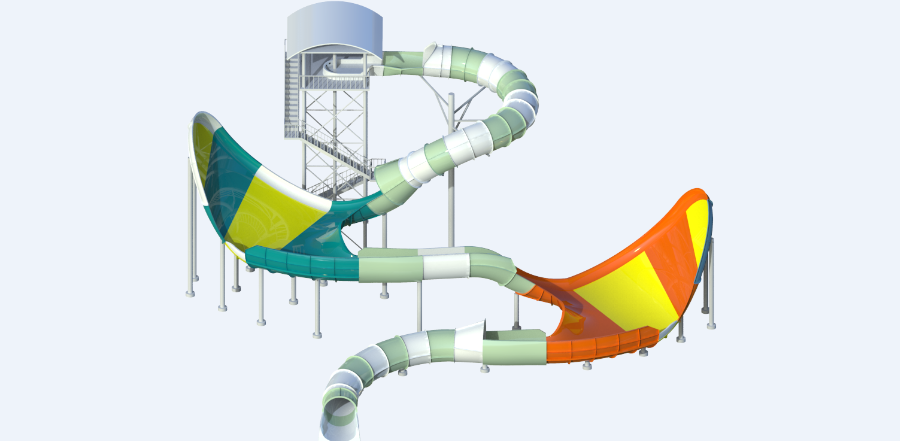
Operational choices convert physical capacity into actual throughput. Staff schedules should match forecasted hourly demand, not just daily totals. Train teams on rapid rider turnaround, efficient loading for multi-rider slides, and consistent enforcement of safety checks to minimize processing time without reducing safety. Use staggered show times and timed-entry for signature attractions to smooth peaks. Small adjustments in turnaround time yield measurable increases in hourly capacity — and consistent turnover improves guest satisfaction.
Technology and data integration
Real-time data lets managers respond before congestion builds. Deploy simple occupancy counters at entry points and queue sensors at major attractions. Mobile apps or digital signage can display wait times and suggest nearby lower-demand amenities, channeling guests away from crowded zones. Integrate point-of-sale analytics with guest flow data to correlate peak purchase periods with capacity stress; this feeds continuous improvement. For a practical procurement route, consider modular aquatic playground equipment that supports phased expansion and easier maintenance.
Common mistakes and practical alternatives
Designers often over-concentrate attractions, creating a single magnet that overwhelms adjacent circulation. Avoid this by scattering mid-capacity features and by offering multiple attractions that serve similar demographics. Poor queue design and undertrained staff are frequent operational failures; the alternative is to prioritize queue geometry and cross-train teams for flexible deployment. Also, resist the urge to rely solely on novelty attractions — proven high-throughput features like wave pools and family raft rides usually deliver steadier demand.
Operational teardown: metrics and verification
An operational production teardown should list hourly throughput, average turnaround time, and peak density per square meter — include {main_keyword} and {variation_keyword} as part of performance benchmarks. Verify assumptions with on-site observations during peak days; Orlando’s resort parks provide many examples of how visitor patterns shift across summer months. Use that real-world anchor to validate predicted hourly capacity against observed behavior and adjust staffing or queue structures accordingly.
Three golden rules for selecting the right strategies
Rule 1 — Measure before you expand: gather baseline throughput and turnaround data for two peak weeks and use it to size new attractions. Rule 2 — Prioritize modularity: choose equipment and layouts that allow phased scale-up and easy reconfiguration. Rule 3 — Balance safety and speed: throughput gains must preserve sightlines, lifeguard coverage, and evacuation routes. These metrics give resorts a defensible method to choose investments that raise throughput without eroding safety or guest experience.
Design that syncs physical capacity, operations, and modular equipment yields predictable, measurable improvements — and makes incremental expansion straightforward. Dalang sits at that intersection, offering products and planning support that fit into the framework above — practical, tested, and adaptable. —