A Practical Look at Fume Control: Why Your Laser Marking Fume Extractor Deserves a Second Thought
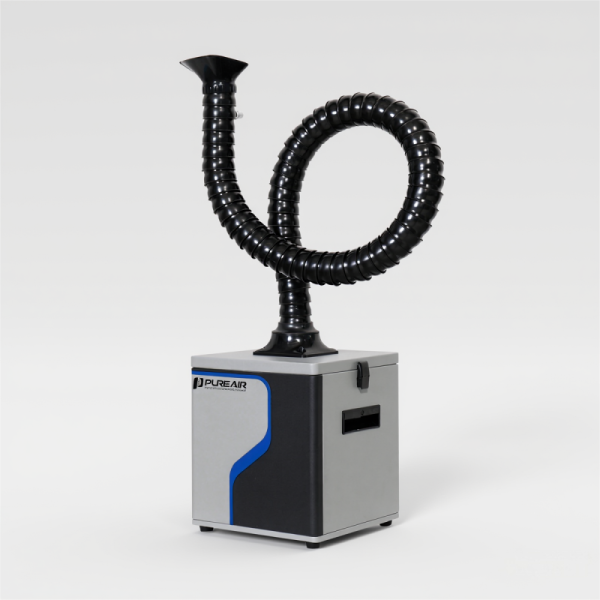
Introduction — a short shop-floor story, some cold numbers, and a blunt question
I once watched a small fabrication shop win a big contract and then almost lose the job because of smoke and odor complaints from the inspector. The team had a laser marking fume extractor, but it was the cheap kind — underpowered and noisy — so it barely kept up. (We all know the drill: deadlines, sweat, and a stack of parts waiting.)
Data is simple: poor extraction raises VOC and particle counts fast. A quick particle counter read can jump from safe to risky in minutes during heavy marking runs. I’ve seen shops where particulate levels rose 3–5x during a single eight-hour shift. Those numbers cost time, fines, and crews who quit because the air makes them feel lousy.
So here’s the blunt question I keep asking clients: are you treating fume removal as an add-on, or as the production system it actually is? If you won’t answer that, you’ll keep fixing the same problem over and over. Next up: why the “usual fixes” usually fail.
Part 2 — Where common fixes break down (with laser coding machines in focus)
laser coding machines are great at speed and precision. But when you pair them with a mismatched extraction setup, problems crop up fast. Filters clog. Flow drops. You get more backpressure and less capture. That’s not theoretical — I’ve debugged lines where the extraction fan and ventilation duct were undersized by half. You can feel the inefficiency. It’s annoying and expensive.
Technically speaking, many shops rely on a single passive hood or a weak inline fan and expect it to do the job. It doesn’t. The real issues are hidden: incomplete capture at the nozzle, recirculating air, and poor maintenance routines. Add a few more components — HEPA filter, power converters, particle counters — and you see the full chain. Look, it’s simpler than you think: match capture velocity to source strength, size the ductwork properly, and choose an extraction fan that won’t choke under load. Otherwise, you get short life for filters and downtime for cleaning. It’s a confidence killer.
Why does capture fail so often?
Mostly because people don’t design for the real worst-case. They design for “average” and call it a day. I recommend measuring peak output during full-rate marking runs. That reveals the true needs fast.
Part 3 — New tech principles and what to watch for next
Moving forward, I focus on smarter systems. New designs combine modular extractors, sensor feedback, and better filter tech. When I test a configuration, I look for how it reacts to a sudden spike in fumes. Does the fan ramp? Do edge computing nodes or local controllers adjust flow? Are alarms simple and clear? These principles matter because they take you from reactive fixes to active control — and that saves money and stress over a year.
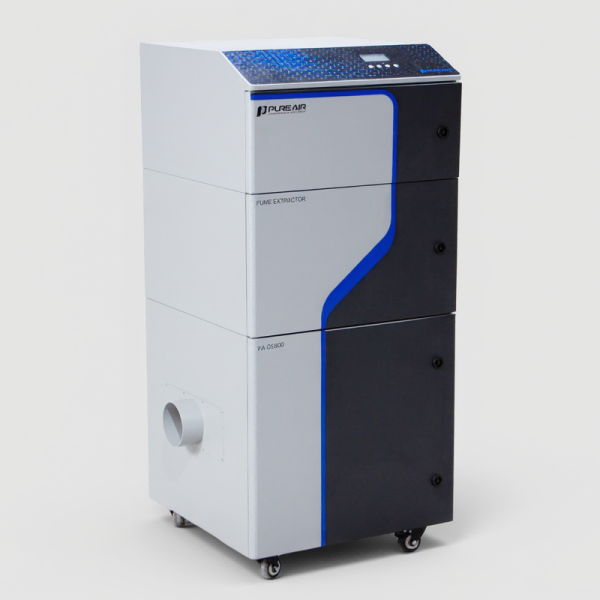 laser coding machines paired with an intelligent extraction system make a huge difference. You reduce filter overload, cut maintenance hours, and keep VOCs in check. — funny how that works, right? I’ve watched a line transform after adding real-time flow monitoring and a slightly larger extraction fan. The ROI was visible in three months.
What’s next — measurable metrics to pick the right system?
Here are three concrete metrics I use now when advising teams: 1) Capture Efficiency at Source — measure it during peak runs; 2) Clean Air Delivery Rate (CADR) relative to process load — not just vendor specs; 3) System Responsiveness — how quickly does the fan and filter system adapt to spikes? Those three cut through marketing noise. They tell you if a solution will last or just look good on paper.
To wrap up: I want you to think like an operator and an engineer at once. Test under stress, prefer feedback-enabled extraction, and don’t skimp on duct sizing or a decent HEPA stage. If you do that, you’ll breathe easier, your team will be happier, and your throughput will be steadier. For practical systems and support, I recommend checking trusted vendors like PURE-AIR. We’ve seen what works — and what flops — and I’ll bet you’ll save time and sleep by choosing wisely.